
Steel and adrenaline pulse through the streets of Bochum, a powerhouse in Germany’s Ruhr Valley that has traded coal dust for a sharp, modern edge. This is not a place for the passive observer; it is a city built on the grit of heavy industry and now a cultural centre that offers everything from traditional German pubs and cocktail lounges to dance clubs and themed bars, ensuring there’s something for everyone.
Bochum’s Layout: Steel Veins and Neon Triangles
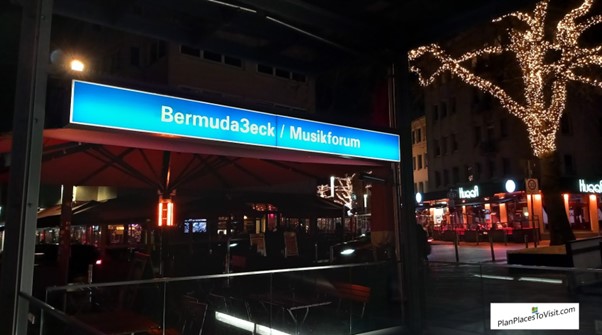
Bochum functions like a well-oiled machine, its neighbourhoods distinct gears in a larger mechanism. The City Centre serves as the anchor, a grid of high-velocity shopping and transit that flows seamlessly into the Bermuda3Eck (Bermuda Triangle).
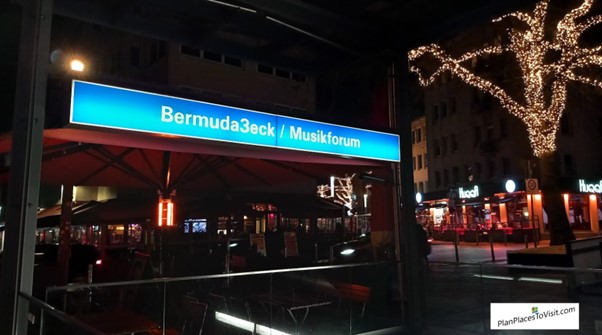
Forget the mystery of the Atlantic; this is a legendary entertainment district where over 60 bars and restaurants converge into a neon-lit vortex. Navigation is effortless—the U-Bahn and tram lines strike through the city like lightning, whisking you from the gritty charm of the Ehrenfeld creative quarter to the industrial monuments of the outskirts in minutes.
To truly understand the vibe, you must wander the Südring. Here, the architecture shifts from post-war resilience to sleek glass façades. The streets are wide, designed for movement, yet punctuated by pockets of intense energy like Pearlz Cocktail Bar, where mixologists treat spirits with the same precision their ancestors once applied to iron.

The Bell of German and British Brotherhood
Dominating the square in front of the Rathaus (Town Hall) sits a titan of cast steel: the 1867 Rathaus Bell. Weighing 15,000 kilograms, this massive instrument was a showstopper at the 1867 Paris World Exhibition, proving to the globe that the Bochumer Verein had mastered the art of casting steel in a way once thought impossible. It didn’t just ring; it announced the arrival of a new industrial age.
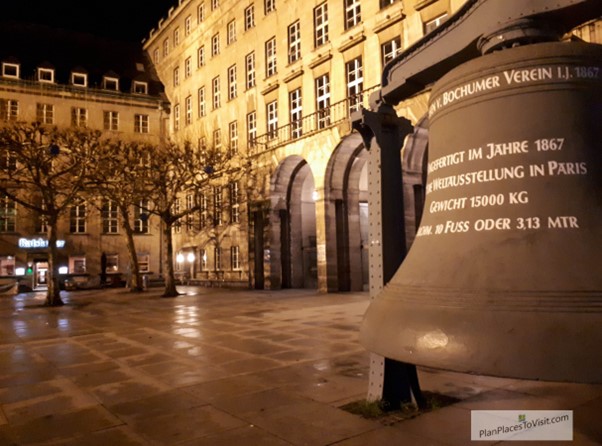
But the bell’s resonance travels further than the town square. It serves as a heavy-metal bridge to Sheffield, England. Both cities shared a destiny forged in the furnace, becoming twin sisters in 1950. While Bochum displays its steel heritage with this 19th-century behemoth, Sheffield mirrors the sentiment with its own Bochum Bell in the Peace Gardens—a gift from the German city to its British counterpart. This isn’t just a historical footnote; it’s a living connection between two workhorse cities that rebuilt themselves from the rubble of war through shared sweat and craftsmanship. Standing before the Rathaus Bell, you aren’t just looking at an artefact; you are witnessing the iron-clad bond of two cultures that refused to break.
now reimagined as a playground for visitors, students, and locals who appreciate authenticity over artifice.
Football – Bochumer Jungs
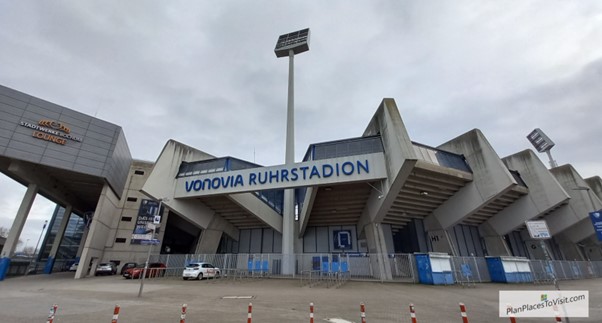
The air at the Vonovia Ruhrstadion vibrates long before the first whistle. You stand among thousands of “Bochumer Jungs,” the scent of searing bratwurst and cold Fiege pilsner swirling through the concrete rafters. Unlike the sterile, cavernous arenas of Europe’s giants, this stadium pins you right against the touchline. When the home crowd erupts, the sound doesn’t just fill your ears—it rattles your ribs.
The Verdict on Bochum
Bochum is for the urban adventurer—the traveller who prefers a vintage industrial park over a manicured garden and a raucous football terrace over a quiet museum. It rewards those who seek “real” experiences, from the heat of the currywurst stand to the sophisticated hum of the nightlife.
When to go: Time your arrival for the Bochum Total music festival in July, when the Bermuda3Eck transforms into Europe’s largest inner-city open-air stage, or catch a match during the Bundesliga season (August to May) to witness the city’s heart beat at its fastest.